The US Solar Energy Industries Association (SEIA) has released a policy blueprint that it claims would “strengthen the reliability of America’s electric grid with solar and storage technologies.”
The document lists eight policy areas that SEIA said are “critical” for local, state and federal authorities to meet “skyrocketing energy demands of AI, data centres and new American innovation”.
Try Premium for just $1
- Full premium access for the first month at only $1
- Converts to an annual rate after 30 days unless cancelled
- Cancel anytime during the trial period
Premium Benefits
- Expert industry analysis and interviews
- Digital access to PV Tech Power journal
- Exclusive event discounts
Or get the full Premium subscription right away
Or continue reading this article for free
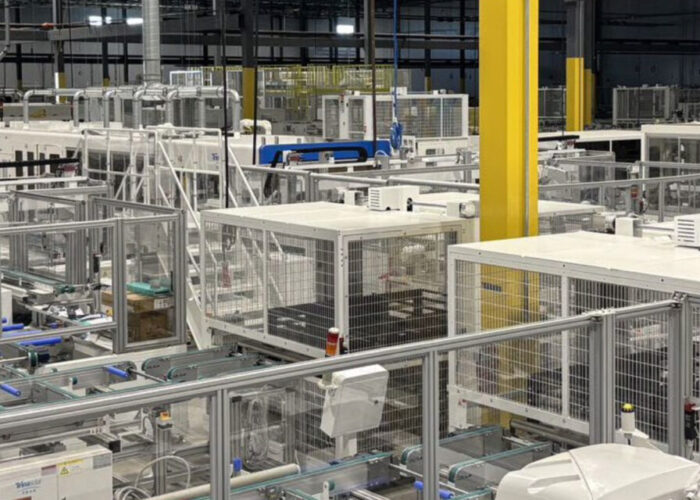
The policies are: a focus on domestic manufacturing and US supply chains; a “regulatory fast-track” for PV and storage projects to meet data centre demand; reforms to the interconnection process and direction for power utilities; modernising transmission infrastructure; investing in long-duration energy storage technology; reforms to the wholesale electricity market; changes to utilities’ integrated resource plans (IRP); and incentivising distributed energy resources like virtual power plants (VPP) and microgrids.
“The reliability of our electric grid – and America’s ability to meet future energy demand – depend on adding more solar and storage to the energy mix,” said Abigail Ross Hopper, president and CEO of SEIA.
“Today, reliable low-cost solar and storage account for the vast majority of the new power generation being built in America. If this administration is serious about winning the AI race, we need policymakers at every level to put in place commonsense, grid-strengthening policies that accelerate solar and storage deployment.”
SEIA, an industry representative group for the solar and energy storage industries, said it would be “advocating for this agenda” at state and federal government level.
Policy shifting against US renewables
Clean energy technologies – particularly solar PV and wind – have taken a policy beating in recent weeks. July’s budget reconciliation bill brought an early end to the federal incentives to build renewable energy generation projects and was followed by an executive order that imposed tighter rules around qualification for the credits.
Manufacturing has also been affected by foreign entity of concern (FEOC) rules, which prohibit the use of Chinese components or Chinese backing in US solar supply chains, if companies wish to receive the 45X advanced manufacturing tax credit.
Energy storage deployments have been less drastically affected, though FEOC restrictions will still apply to battery manufacturers.
The effects of these changes are yet to be seen. PV Tech reported yesterday that the US added almost 18GW of solar PV in the first half of 2025, and the Energy Information Administration (EIA) has forecast that the country will see almost 40GW by year’s end, as well as over 18GW of new battery storage capacity.
However, SEIA itself predicts that the market will slow in the coming years, largely as a result of the policy changes in the budget reconciliation bill. It expects that the US will install 21% less solar PV by the end of the decade than it would have done in the previous policy environment.
This decline comes as solar PV and energy storage continue to account for the overwhelming majority of new power capacity in the US. In the first half of the year the two technologies accounted for 82% of all new energy capacity on the US grid. US electricity demand, particularly from the growth of AI and data centres, is set to continue to rise and solar – particularly with storage – represents an affordable and fast way to power that boom.